
The move-out bill: when rental deductions deserve a closer look
You moved out, handed back the keys, and waited for your security deposit. Instead, a bill arrived: charges for paint, carpet, cleaning, and repairs that took most or all of the money. Some of those deductions may be perfectly legitimate. Others may not be allowed at all.
This explainer walks through what landlords can generally deduct, how “normal wear and tear” differs from damage, the deadlines that apply in several large states, and how to review and respond to a move-out bill. It is general information, not legal advice. Deposit rules vary by state and sometimes by city.
KEY TAKEAWAYS
- Landlords generally cannot charge your deposit for normal wear and tear, only for damage beyond it, unpaid rent, and certain other costs.
- Most states set a deadline to return the deposit or send an itemized list of deductions, often between 14 and 30 days.
- Missing that deadline can cost a landlord the right to keep any of the deposit in some states.
- Your move-in photos, move-out photos, and written records are usually the strongest evidence in a dispute.
What a landlord can generally deduct
A security deposit protects the landlord against specific losses. While state laws differ in the details, they usually allow deductions for a similar set of costs. For how much a landlord can collect in the first place, see our security deposit guide.
- Unpaid rent that was owed when you moved out
- Damage beyond normal wear and tear caused by you, your household, guests, or pets
- Cleaning needed to return the unit to the condition it was in when you moved in, in states that allow it
- Other charges your lease and state law allow, such as unpaid utilities owed to the landlord
What a landlord generally cannot do is use the deposit to cover the ordinary aging of a home. California, New York, and Texas all say this directly: deductions for ordinary or normal wear and tear are not allowed. California’s law adds that the cumulative effects of wear and tear are also off-limits, which matters when a long tenancy ends.
Wear and tear vs. damage
The line between wear and tear and damage is where most move-out disputes start. Wear and tear is the deterioration that happens when people live in a home normally, even carefully. Damage is harm that goes beyond that, often from accidents, neglect, or misuse.
| Usually treated as normal wear and tear | Often treated as damage |
|---|---|
| Faded or lightly scuffed paint | Large marks, unapproved paint colors, or many holes in walls |
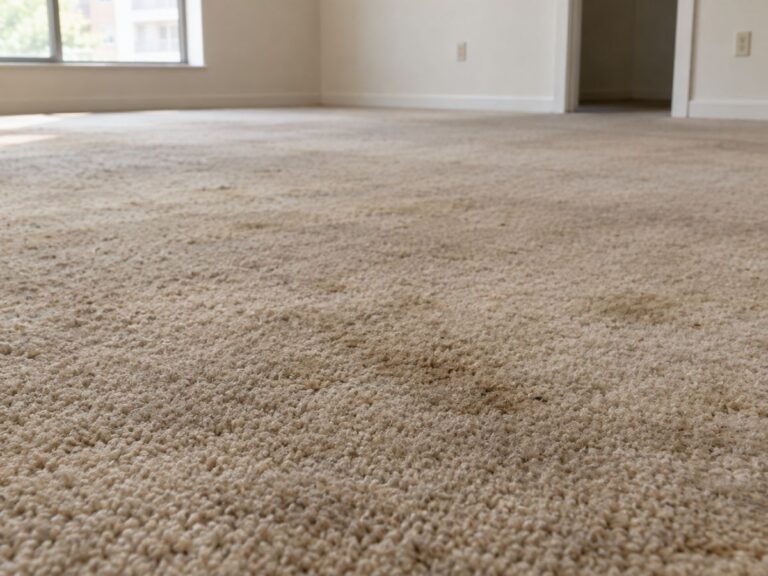
| Carpet worn thin in walkways after years of use | Burns, large stains, or pet damage to carpet |
| A few small nail holes from hanging pictures | Broken doors, cracked countertops, or damaged fixtures |
| Loose door handles or worn cabinet hinges | Missing items that came with the unit |
| Minor floor scratches from normal furniture use | Deep gouges or water damage caused by the tenant |
Examples are general. How a specific charge is treated depends on your lease, your state’s law, and the facts.
The age of an item matters too. Paint, carpet, and appliances wear out over time no matter who lives in a unit. In many places, a landlord who replaces a ten-year-old carpet at the end of a tenancy may have a hard time justifying the full replacement cost as a deduction, because much of its useful life was already used up. How this is calculated varies, so look for whether the charge reflects the item’s age and condition, not just the price of a new one.
The deadlines that matter
Most states give landlords a set number of days after move-out to return the deposit, send an itemized list of deductions, or both. Missing that deadline can have real consequences for the landlord. In some states, it means losing the right to keep any part of the deposit.
| State | Deadline after move-out | What the landlord must send | If the landlord gets it wrong |
|---|---|---|---|
| California | 21 days | Itemized statement; copies of receipts or invoices when deductions for repairs or cleaning exceed $125 | Bad-faith retention can lead to damages of up to twice the deposit, plus actual damages |
| New York | 14 days | Itemized statement explaining the basis for any amount kept | Missing the 14-day deadline forfeits the right to keep any of the deposit |
| Texas | 30 days (once the tenant gives a written forwarding address) | Written, itemized list of deductions | Bad-faith retention: $100 plus three times the amount wrongfully withheld, plus attorney’s fees |
| Florida | 15 days if no claim; 30 days to send notice of a claim | Written notice of the intended claim by certified mail (or email where permitted); tenant has 15 days to object | Missing the 30-day notice forfeits the right to claim against the deposit |
| Illinois | 30 days for an itemized statement; 45 days to return the deposit if none is sent | Itemized statement of damage with paid receipts or copies | Bad-faith failure can lead to twice the deposit due, plus court costs and attorney’s fees |
Summary of state statutes as of October 2026. Local rules, lease terms, and exceptions can change the outcome. Check the linked statute or a local legal aid office before acting.
A few details are easy to miss:
- Texas landlords do not have to refund the deposit or send the itemized list until the tenant provides a written forwarding address. Giving that address promptly starts the clock.
- Florida uses a two-step process. If the landlord plans to keep part of the deposit, it must send written notice of the claim within 30 days, and the tenant then has 15 days to object in writing.
- New York and California both give tenants the right to ask for an inspection before moving out, so they have a chance to fix problems and avoid deductions.
If your state is not listed, your state attorney general, consumer protection office, or a local legal aid organization usually publishes a plain-language guide to deposit rules.
If your landlord misses the deadline, see what happens when your landlord misses the security deposit deadline.
What the itemized statement should include
A deduction should be explained, not just announced. Depending on your state, an itemized statement may need to list each charge separately, describe the reason for it, and include supporting documents. California, for example, requires copies of receipts, bills, or invoices when deductions for repairs or cleaning exceed $125, and Illinois requires paid receipts or copies for damage charges.
California has also added photo requirements. For tenancies that began on or after July 1, 2025, landlords must take photos of the unit at or before move-in. Since April 1, 2025, they must take photos at move-out both before and after repairs or cleaning that will be charged to the deposit.
If a statement says only “cleaning: $400” or “repairs: $900” with no breakdown, that alone may be worth questioning.
How to review your move-out bill
Before responding, take time to compare the bill against your own records. A calm, organized review usually leads to a better outcome than a quick reaction.
- Check the dates. Note when you moved out, when you gave a forwarding address, and when the statement arrived. Compare them with your state’s deadline.
- Match each charge to a reason. Every deduction should connect to unpaid rent, damage, cleaning, or another allowed cost.
- Look for wear and tear. Flag charges for faded paint, worn carpet, minor scuffs, or other signs of normal use.
- Compare with your evidence. Pull up your move-in checklist, photos, videos, and any messages about repairs during the tenancy.
- Check the math and the age of items. Ask whether a replacement charge accounts for how old the item was.
- Ask for documentation. If receipts or photos are missing, request them in writing. In California, tenants can request supporting documents within 14 days of receiving the statement.
If you disagree with the deductions
Many deposit disputes are resolved with a clear written request. If you believe some charges are not allowed, these steps are commonly used:
- Write to the landlord. Explain which charges you dispute and why, attach your evidence, and state the amount you believe should be returned. Keep a copy and send it in a way you can prove, such as email or certified mail.
- Follow your state’s process. In Florida, for example, the objection must be made in writing within 15 days of receiving the landlord’s notice.
- Consider small claims court. Small claims courts handle many deposit disputes, often without a lawyer. Filing limits and procedures vary by state and county.
- Contact a consumer or tenant resource. Your state attorney general’s office, a local tenant organization, or a legal aid program can explain the rules where you live.
Some states allow additional damages when a landlord keeps a deposit in bad faith. In Texas, for example, a landlord who wrongfully withholds a deposit in bad faith can owe $100 plus three times the amount withheld, plus attorney’s fees. Whether those penalties apply depends on the facts and on how a court views them.
The records that make the difference
Deposit disputes usually come down to evidence. Whether you are moving out now or will be in the future, these records help:
- A signed move-in checklist or condition report
- Dated photos or video of every room at move-in and move-out, including close-ups of existing damage
- Copies of repair requests and the landlord’s responses during the tenancy
- Your lease, any addendums, and the move-out instructions the landlord provided
- Proof of the date you returned the keys and the forwarding address you provided
Frequently asked questions
Can a landlord charge for repainting after I move out?
It depends on the condition of the walls and how long you lived there. Routine repainting because paint has faded or aged is often treated as normal wear and tear. Repainting to fix significant damage, such as large marks, many holes, or unapproved colors, is more likely to be a valid deduction.
Can a landlord keep my deposit for professional carpet cleaning?
Some states allow cleaning charges only to return the unit to its move-in level of cleanliness, and some leases address carpet cleaning directly. Check your lease and your state’s law. A charge for normal soiling from everyday use may be harder to justify than one for stains or pet damage.
What if my landlord never sent an itemized list?
In several states, a landlord who misses the deadline for an itemized statement or notice loses the right to keep part or all of the deposit. Check your state’s deadline and keep a record of when you moved out and when you provided your forwarding address.
Do I need a lawyer to get my deposit back?
Many tenants handle deposit disputes on their own, often in small claims court. If the amount is large, the lease is complicated, or the landlord claims you owe more than the deposit, speaking with a licensed attorney or legal aid office can help.
Does the landlord have to show proof of repair costs?
Some states require receipts, invoices, or photos to support deductions, as California and Illinois do. Even where it is not required, asking for documentation in writing is a reasonable step when a charge seems unexplained.
Sources
- California Civil Code § 1950.5
- New York General Obligations Law § 7-108
- Texas Property Code §§ 92.103, 92.104, 92.107, 92.109
- Florida Statutes § 83.49
- Illinois Security Deposit Return Act, 765 ILCS 710
More renters’ guides are in our Housing section. This article is general information, not legal advice. See our Legal Disclaimer. Spot an error? Read our Corrections Policy.