
Can a landlord charge for carpet replacement after five years?
Your move-out statement includes a large charge to replace the carpet. You lived in the unit for years, and the carpet was not new when you moved in. Can the landlord make you pay for brand-new carpet?
Often, not in full. Carpet wears out with ordinary use, and landlords generally cannot charge tenants for normal wear and tear. Even when a tenant does damage the carpet, the carpet’s age usually matters. This explainer covers how that works. It is general information, not legal advice. For a broader look at move-out charges, see our explainer on reviewing a move-out bill.
KEY TAKEAWAYS
- Landlords generally cannot charge you for normal wear and tear, including carpet that is simply worn out from everyday use.
- For damage beyond normal wear, many landlords, judges, and housing agencies limit the charge to the carpet’s remaining useful life, not the full cost of new carpet.
- A five-year-old carpet may have little or no value left, depending on its quality and expected lifespan.
- Some states set specific rules. Colorado, for example, bars treating carpet as irreparably damaged if it has not been replaced in the past 10 years.
Normal wear and tear vs. damage
State deposit laws generally let a landlord deduct the cost of repairing damage, but not ordinary wear and tear. California’s law, for example, limits deductions to repairing damage “exclusive of ordinary wear and tear,” and bars claims for conditions that existed before the tenancy.
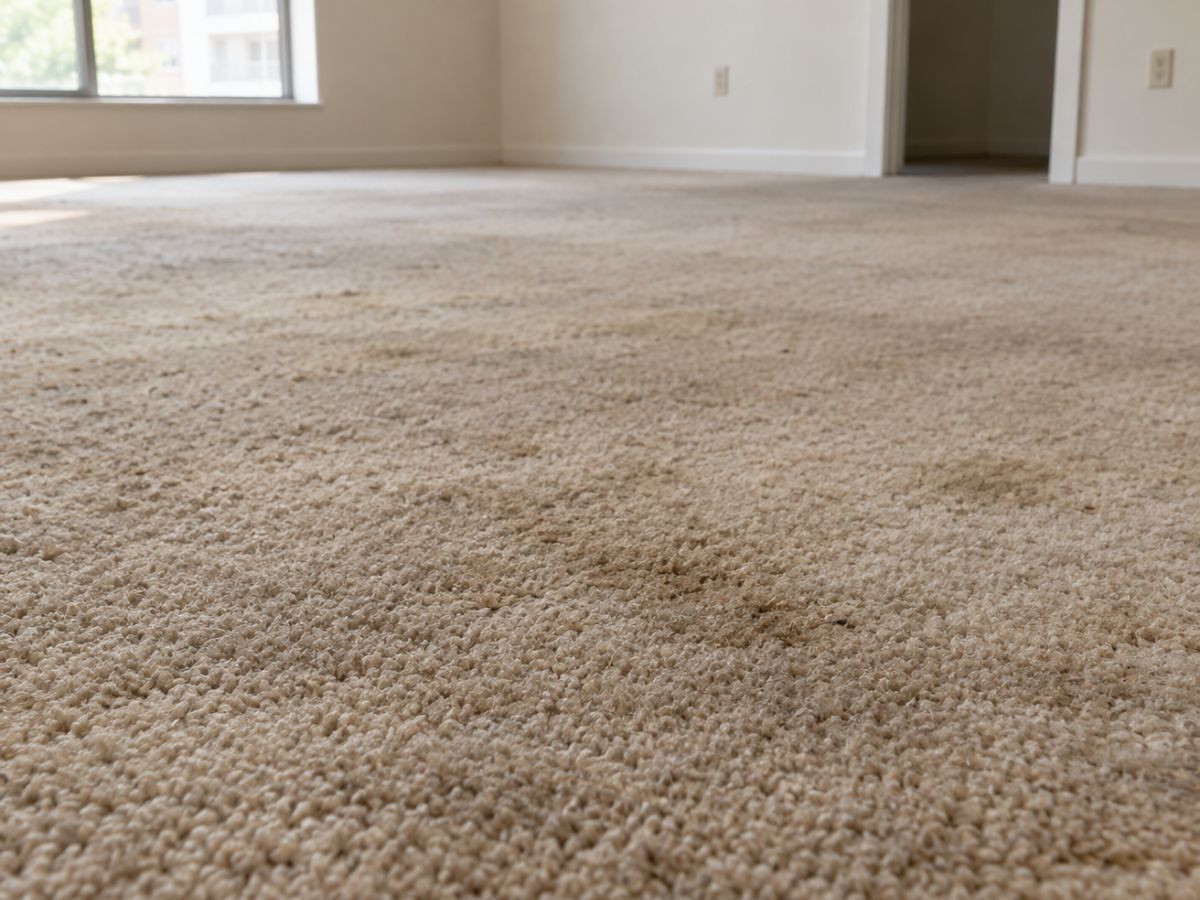
Carpet is one of the most common disputes because it wears visibly even with careful use. Traffic paths, fading, and light matting are expected. Burns, tears, and deep pet stains are more likely to count as damage.
| Usually normal wear and tear | Often treated as damage |
|---|---|
| Matted or flattened walking paths | Burns, rips, or cut sections |
| Fading from sunlight | Large or permanent stains, such as paint, dye, or bleach |
| Light soiling that regular cleaning removes | Pet urine that soaked into the pad, or chewed or clawed areas |
| Minor fraying at seams and doorways from age | Water damage caused by the tenant, such as an overflowed tub |
| Small furniture dents | Unapproved alterations, such as removing or cutting carpet |
General examples only. Whether a specific condition counts as damage depends on your lease, your state’s law, and the carpet’s condition at move-in.
Why the carpet’s age matters
Carpet has a limited lifespan. Even if a tenant damages it, the landlord would have had to replace it eventually. For that reason, many landlords, judges, and housing agencies look at the carpet’s remaining useful life and charge the tenant only for the share of value the damage took away.
A legal assistance article from the Air Force’s 452nd Air Mobility Wing legal office describes this method: the cost of replacement is prorated so the tenant pays only for the remaining useful life. Its example is a carpet with a 10-year life that is eight years old, where a $1,000 replacement would justify a charge of about $200.
How long is a carpet’s useful life? There is no single national rule. A sample life expectancy chart in HUD guidance for owners of HUD-assisted housing lists plush carpeting at 5 years in family housing and 7 years in elderly housing. Other landlords and courts may use different figures based on carpet quality.
HOW THE USEFUL-LIFE MATH WORKS
The idea: you pay only for the part of the carpet’s life that your damage cut short.
Example:
- Expected life of the carpet: 7 years
- Age of the carpet when you moved out: 5 years
- Years of life left: 2 of 7
- Cost of new carpet: $2,100
Charge: $2,100 × 2 ÷ 7 = $600, not $2,100.
If the same carpet was expected to last 5 years, it had no useful life left at move-out, so a replacement charge would be hard to justify.
Illustration only. Expected lifespans vary by carpet quality and use, and states and courts do not all apply this method the same way.
State rules to know
- Colorado: Under changes to the state’s security deposit law effective January 1, 2026, replacing carpet counts as a reason to keep deposit money only if the carpet has substantial and irreparable damage beyond normal wear and tear that did not exist before the tenancy. Carpet that has not been replaced in the 10 years before the tenancy ends cannot be treated as irreparably damaged, and the landlord may keep only the minimum amount needed.
- California: Landlords cannot deduct for ordinary wear and tear or preexisting conditions, and cannot charge for professional carpet cleaning unless it is reasonably needed to return the unit to its move-in condition. Landlords must also take photos of the unit after move-out and after repairs, and for tenancies starting on or after July 1, 2025, at move-in, and include them with deductions.
- Other states: Most states bar deductions for normal wear and tear, but few spell out carpet rules. Check your state’s deposit law through our state legal resources page.
What to ask for
- The carpet’s age. Ask when the carpet was installed. A receipt, invoice, or earlier lease records may show the date.
- Move-in condition. Compare your move-in checklist and photos to the move-out photos. Damage that was already there should not be charged to you.
- The actual cost. Ask for the invoice or estimate. If only one room or a small area was damaged, ask whether a repair or patch would have been enough.
- How the charge was calculated. Ask whether the landlord accounted for the carpet’s age. If not, propose a prorated amount in writing.
For deadlines and documentation rules, see our security deposit guide. If the landlord has not sent an itemized list at all, read what happens when your landlord misses the security deposit deadline.
If you disagree with the charge
Send a short written dispute that lists the carpet’s age, the move-in condition, and the amount you believe is fair, with photos attached. Many disputes settle at this stage. If not, small claims court is the usual next step, and several states, including California, Texas, and Colorado, put the burden on the landlord to show deductions were reasonable. A state attorney general’s consumer office or local legal aid program can also help.
Frequently asked questions
Can a landlord charge the full cost of new carpet?
Usually not for normal wear and tear. For real damage, many landlords and courts reduce the charge based on the carpet’s age and remaining useful life, so a tenant is not paying for an upgrade the landlord would have needed anyway.
How long is carpet supposed to last in a rental?
It depends on quality and use. HUD’s sample chart for assisted housing lists plush carpet at 5 years in family housing and 7 years in elderly housing. Higher-grade carpet may be expected to last longer.
What if my pet damaged the carpet?
Pet damage, such as urine soaked into the pad or chewed areas, is often treated as damage rather than wear. Even then, the carpet’s age can still reduce what you owe. A pet deposit or pet fee, if you paid one, may also affect how charges are handled under your lease and state law.
Can my landlord charge for carpet cleaning?
Many states allow a cleaning charge if the unit was left dirtier than at move-in. California limits charges for professional carpet cleaning to cases where it is reasonably necessary to return the unit to its move-in condition, not counting ordinary wear and tear.
Does the same rule apply to paint?
Similar ideas often apply. Paint also wears with time, and HUD’s sample chart lists interior paint with a shorter lifespan than many other items. We cover painting costs in a separate article.
Sources
- California Civil Code § 1950.5
- Colorado HB25-1249, Tenant Security Deposit Protections
- HUD, Appendix 5D: Sample Life Expectancy Chart
- 452nd Air Mobility Wing Legal Office, “What happened to my security deposit?”
More renters’ guides are in our Housing section. This article is general information, not legal advice. See our Legal Disclaimer. Spot an error? Read our Corrections Policy.